
Preparing Your Midwest Home for Winter: A Homeowner Checklist
Winter in the Midwest can be hard on a home. Cold temperatures, snow, ice, wind, and freeze-thaw cycles can all create problems if your home is not ready before the weather turns.
The good news is that a little preparation in late summer or fall can help protect your home, improve comfort, and reduce wasted energy during the winter months.
Here is a practical winter preparation checklist for homeowners in the Chicago suburbs and surrounding Midwest communities.
1. Check Your Attic Insulation
Your attic plays a major role in winter comfort and energy efficiency.
If your attic is under-insulated, warm air from your living space can escape into the attic. This can make your furnace work harder, increase energy costs, and contribute to uneven temperatures throughout the home.
Poor attic insulation can also contribute to ice dams. When heat escapes into the attic, it can warm the roof deck and melt snow. That melted snow may refreeze near the colder roof edges, creating ice buildup.
Before winter, have your attic insulation inspected to make sure it is properly installed, evenly distributed, and sufficient for Midwest winter conditions.
2. Make Sure Your Attic Can Breathe
It may seem strange, but your attic still needs ventilation in winter.
Proper attic ventilation helps remove excess moisture and keeps attic temperatures more consistent. Without proper airflow, moisture can build up inside the attic and contribute to mold concerns, damp insulation, wood damage, and roof problems.
Check that soffit vents, roof vents, ridge vents, attic fan openings, and attic baffles are not blocked by insulation, leaves, nests, or debris.
A properly insulated and ventilated attic helps protect both your roof and your living space.
3. Inspect Attic Baffles and Soffit Airflow
Attic baffles help keep air moving from the soffit vents into the attic. When baffles are missing, crushed, blocked, or improperly installed, insulation can cover the soffit vents and stop intake airflow.
That can create ventilation problems in both summer and winter.
Before cold weather arrives, make sure your attic has proper soffit airflow. This is especially important if blown-in insulation has been added in the past.
4. Seal Air Leaks
Small gaps and cracks can waste a surprising amount of energy.
Cold air can enter around windows, doors, attic access panels, recessed lights, plumbing openings, wiring penetrations, and basement rim joists. Warm indoor air can also escape into the attic through unsealed openings.
Common areas to check include:
- attic hatch or pull-down stairs
- window and door frames
- exterior outlets
- plumbing and wiring openings
- recessed lighting areas
- basement and crawl space openings
- gaps around vents and ducts
Air sealing helps reduce drafts and improves the performance of your insulation.
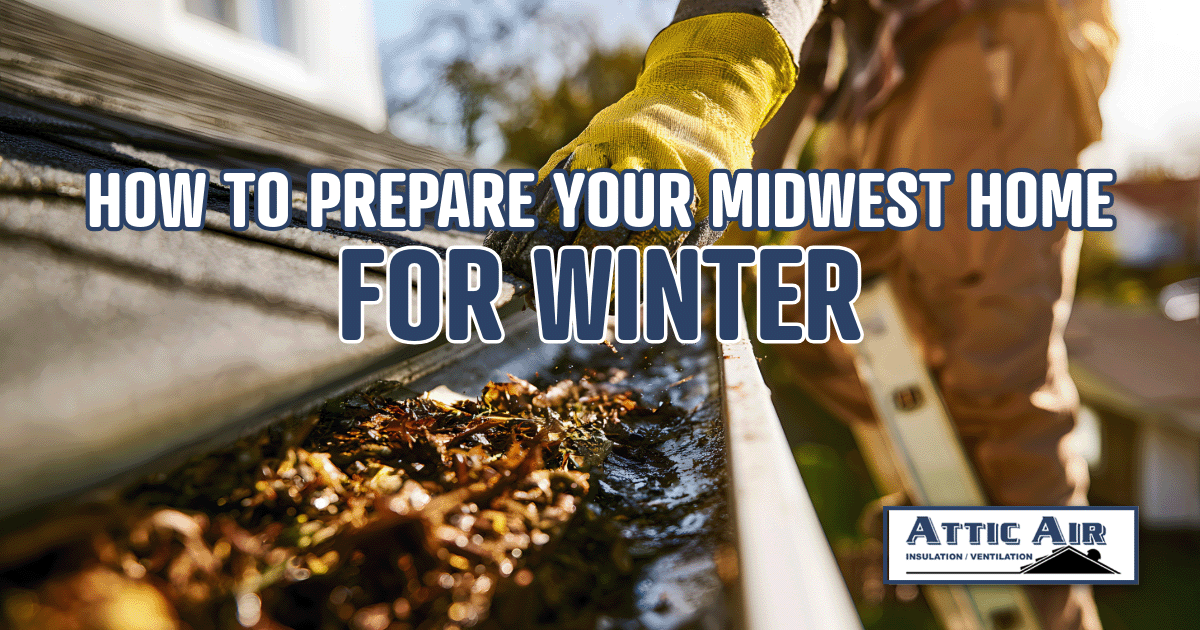
5. Clean Gutters and Downspouts
Clogged gutters can cause serious winter problems.
When leaves and debris block gutters, melting snow and rain cannot drain properly. Water may freeze, overflow, or back up near the roofline. This can contribute to ice dams, fascia damage, roof leaks, foundation issues, and slippery walkways.
Before winter, clean gutters and make sure downspouts direct water away from the foundation.
6. Inspect the Roofline
Look for signs of damage before snow and ice arrive.
Check for:
- loose or missing shingles
- damaged flashing
- gaps near vents or roof penetrations
- sagging gutters
- damaged soffits or fascia
- signs of animal entry
- exposed openings near the roofline
Small problems can become much more expensive once winter weather sets in.
7. Protect Against Animals and Critters
As temperatures drop, mice, squirrels, raccoons, birds, and other animals may look for warm places to shelter.
Your attic can be an attractive target if there are loose vents, damaged soffits, roofline gaps, or unprotected openings.
Before winter, inspect attic vents, attic fan covers, soffits, and exterior openings. Proper screening can help keep animals out while still allowing the attic to ventilate.
8. Service Your Heating System
Do not wait until the first freezing night to find out your furnace needs attention.
Schedule a heating system tune-up before winter. Replace the air filter, check thermostat settings, and make sure vents and returns are not blocked by furniture, rugs, or curtains.
A clean, well-maintained heating system can operate more efficiently and help keep your home more comfortable.
9. Check Windows and Doors
Drafty windows and doors can make rooms feel colder and cause the heating system to run more often.
Inspect weatherstripping, caulking, door sweeps, and window locks. Replace worn or damaged seals where needed.
Even small improvements can make a noticeable difference during windy Midwest winter weather.
10. Disconnect and Protect Outdoor Water Lines
Frozen pipes and hose bibs can cause costly water damage.
Before freezing temperatures arrive:
- disconnect garden hoses
- shut off exterior water lines if your home has interior shutoff valves
- drain outdoor faucets
- insulate vulnerable pipes
- check crawl spaces and unheated areas for exposed plumbing
This simple step can prevent major winter headaches.
11. Test Smoke and Carbon Monoxide Detectors
Winter means furnaces, fireplaces, space heaters, and closed-up homes.
Test smoke alarms and carbon monoxide detectors before heating season. Replace batteries if needed and make sure detectors are installed in the proper locations.
This is one of the simplest and most important winter safety steps for every homeowner.
12. Review Your Energy Bills and Comfort Problems
If your home was drafty, unevenly heated, or expensive to heat last winter, do not ignore those clues.
Common signs of attic or insulation problems include:
- cold upstairs bedrooms
- rooms that never feel comfortable
- high heating bills
- drafts near ceilings or attic access points
- ice dams
- uneven snow melt on the roof
- musty attic odors
- damp or compressed insulation
These problems often point to issues with insulation, air sealing, ventilation, or attic airflow.
A Winter-Ready Home Starts in the Attic
For Midwest homeowners, winter preparation is about more than comfort. It is about protecting your home from cold weather, moisture, ice, pests, and wasted energy.
Your attic is one of the best places to start.
Proper insulation, air sealing, ventilation, baffles, and attic protection can help your home stay more comfortable and energy-efficient all winter long.
Schedule a Free Attic Inspection
Attic Air helps homeowners throughout the Chicago suburbs prepare their homes for every season.
If you are concerned about attic insulation, ventilation, air leaks, attic baffles, animal entry points, or winter energy efficiency, our team can inspect your attic and recommend practical improvements.
Contact Attic Air today to schedule your free attic assessment before winter weather arrives.
Call Attic Air at 630-830-3870.